JESS JORGENSEN
DECOMPOSE TO RECOMPOSE: FUNGAL INTELLIGENCE AND THE FUTURE OF REGENERATIVE STRATEGY
L+OSMONAUTA #0005
/
15 min read
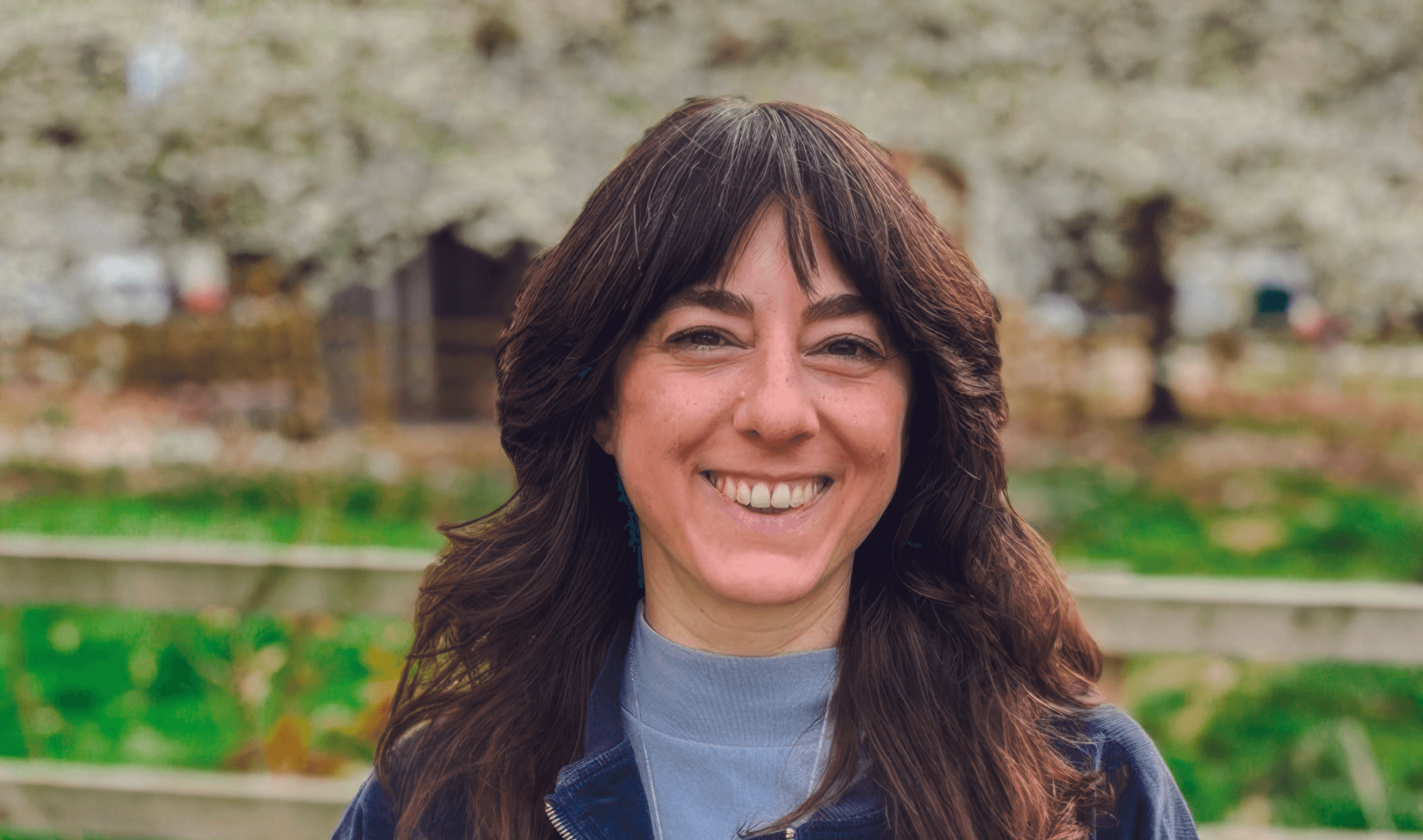
Jess Jorgensen is a foresight strategist with over two decades of experience in global research and insight. A passionate mycophile, she founded Sporesight, a social enterprise that blends foresight, consultancy and regenerative innovation inspired by the intelligence of nature and fungi. She helps leaders and organisations adopt regenerative thinking to imagine sustainable futures and innovative cultural projects.
Interview :
JESS JORGENSEN
Founder of Sporesight
To begin, we’d love to hear how your journey with fungi began. What first drew you to this world, and how did your interest evolve into the dedicated focus you have today?
Firstly, just to say thank you so much for inviting me to chat about Sporesight and mushrooms. I love talking about fungi. As you may be aware, I had a two-decade career in the world of insights and foresight, spanning sub-Saharan Africa, the UK, and the US. I was a director of a number of agencies, doing big things like expanding operations across sub-Saharan Africa and working with some of the world's largest brands.
But inside, there was always this quiet erosion, a push from what was going on in the world and a pull from knowing that something could be better or different. I'll talk more about that in a second, but there was a sense that, however polished and high-quality the work we were doing felt, it always seemed extractive. It felt purely anthropocentric. The research, insights, and work we were doing for corporate clients felt at odds with regenerative, even sustainable ways of being on planet Earth. So, it was an exercise in running away from something extractive, and running towards something more regenerative.
I was very lucky to grow up in a small town outside Cape Town, in South Africa. Being British as well, having access to both countries and both worlds was quite a privilege. In the mountains, we were surrounded by forests, fynbos, and wild animals. As a child, I spent a lot of time with flora, fauna and funga, who often were better friends to me than humans. But they also showed, without trying, how to exist without destroying their home.
As a kid, I could never quite understand how humans could be so intellectual yet so unintelligent in the way we destroyed our only home. That made no sense to me, both as a child and as a teenager.
It was only later, as an adult, that I began to consider how we could learn from those flora and fungi beings to be more intelligent.
You’ve travelled across the world with your project Running with Mushrooms. Could you tell us how this journey began, what inspired you to start it, and how it evolved into what you’re doing today?
We’re also curious to know how meeting so many different people and cultures has enriched your project. How have they responded to your work?
I’ll start by talking about what sparked that tour in the first place. It was called Running with Mushrooms in the beginning, and it has since morphed and evolved into Sporesight. Essentially, as a researcher and ethnographer by trade, I was looking for ways to apply a lifetime of skills and expertise to something that could help us think more transformatively about how we exist on this planet.
That’s what Sporesight aims to do. We’re a regenerative consultancy, and we genuinely believe that humans have the power to create real transformation, to design and shape better futures that are regenerative not only for us, but also for our home Earth and all the more-than-human beings that share the landscape with us.
The World Mushroom Tour really began as an exploration of whether that idea was just a pipe dream or something real. At first, I had no fixed purpose other than to follow the mycelium, to move from one conversation to the next, exploring how fungi, nature-centric thinking and nature’s intelligence are influencing the ways we imagine and design better futures.
Fungi have a lot to teach the world, and I just kept learning.
The tour became quite expansive. It really stretched across the globe because after each conversation or interview, someone would say, “Oh, you have to speak with this person,” or “You should meet this organisation,” or “Have you seen what’s happening in Thailand? Have you seen what these people are doing in South Africa?”
So, the tour started in the UK but soon took me to Vietnam, Thailand, Kenya, Uganda, South Africa, and across Europe, and that was just in person. I’ve also met more than a hundred people online from all over the world. Each conversation has built on the last, deepening the understanding of how we can transform and learn from nature’s intelligence, and how to apply those principles to the way we do business, work, think, and design.
Since 2019, when I began actively exploring this, I’ve seen a real shift in how people respond. In the beginning, they thought I was just the crazy, weird mushroom girl. Now people are saying, “Oh, we understand how nature’s intelligence can actually shape the way we think.” I feel fortunate that my journey has coincided with a broader global understanding of concepts like biomimicry.
At the same time, incredible innovators around the world have been expanding how we work with biomaterials, with fungi and other natural materials in construction, food, wellness, and medicine. As this explosion of fungi and biomaterial innovation has taken place, it’s also changed how people respond to my work.
When you began speaking and interviewing people and organisations, who did you focus on at first? Were you more interested in those already aware of this field, or in people who might be impacted or inspired by discovering it?
In the beginning, it was simply about talking to anyone working with fungi in any capacity. But quite quickly, the field revealed its vastness, spanning many sectors. The focus soon shifted towards those intentionally exploring how fungi are shaping our futures and applying nature’s intelligence to transform agriculture, food systems, and product design.
So really, it evolved into focusing on how people are working to transform what we do, to become more regenerative and to explore different ways of being.
The concept of how fungi work is fascinating, and we’ve read that you’re exploring how this relates to business organisations and strategic thinking. While it’s easier to see fungi as a material or for industrial applications, how do you apply fungal intelligence as a metaphor to influence organisational practices and strategic decision-making?
That’s a great question. This is something I, along with a number of partners over the past few months, have been developing. We’ve created a framework called Rot and Regeneration, which essentially positions fungi as your futurist. It’s a playbook for imagining symbiotic futures and a toolkit of regenerative design principles. There are twelve principles in total, all structured under this banner, two focused on rot and ten on regeneration. Each can be applied to business, strategy, habits, mindset, organisational structure, or even how we design a system or product.
So each of those twelve principles is essentially part of the toolkit we’re now using with organisations to turn this kind of thinking into something that has a very practical application.
The framework is still in development. It’s a prototype, and we aim to design it beautifully as a book detailing all twelve principles, each with practical applications and examples.
One of the twelve principles is Decentralisation, I can get to that in a second. But before we do, I think I’ll start with the rot process, because it’s super fun.
Rot reflects the natural life cycle of fungi: they pop up, spread spores, and return to the earth through decay.
This cycle of life and death sustains forests and natural systems.
As you can imagine, our relationship with rot, death, and decay as humans — we tend to go, “Oh, that’s a bit cringe.” We don’t really like to engage with it.
But, as Giuliana Furci from the Fungi Foundation says, rot and mold are the new rock and roll. Rot is about gracefully letting go of what isn’t serving us. This allows death and decay to become the conditions for new life. Composting, for example.
So our first principle is really about decay and compost. It’s about composting a product, a service, a mindset, or even an entire organisation or system that’s no longer serving. If it isn’t regenerative or contributing to a thriving future for people and the planet, can we dismantle it into parts that can be used as compost? Can we turn its waste into fertile nourishment for regenerative growth? Can we, as someone once said, decompose to recompose?
A lovely and quite practical example of this is a company called Recompose, which is completely transforming the way we bury ourselves when we die. Our rituals and processes around death have traditionally been quite unsustainable. Recompose reimagines that by turning human bodies into environmentally and emotionally regenerative nourishment for the cycle of life. You literally plant your body rather than sealing it in a box that adds toxins to the ground. That’s a very tangible example of rot in action.
Now, when it comes to regeneration, oh gosh, I never know which one to pick. Let’s go with adaptability.
Fungi are among the oldest and most successful organisms on Earth, having survived for over 400 million years and likely to outlive us.
They adapt by shifting form, rerouting resources, and forming symbiotic relationships with the organisms around them. When you start thinking more like fungi, you realise they’re constantly evolving to thrive in incredibly diverse, often hostile conditions.
So, if you’re a company, how does that help you? One of our principles, Adaptability, is inspired by a microscopic fungus called Paecilomyces variotii (and it's a story of starships). It has mastered the art of surviving in a chaotic world. This fungus has a range of selectively expressed genes it can switch on or off in response to external stress.
It essentially has a kind of transposable genetic backpack. It’s like carrying a set of blueprints for how to deal with any external event. For us, that might be COVID, or the power blackouts that hit Europe a few months ago. Any changing conditions. This fungus carries a backpack of supermassive DNA genes, almost like a “get out of jail free” card for when it’s in trouble. Scientists actually call these genetic elements starships, which is amazing.
These fungi can take their starships and say, “Okay, this just happened. I’ll use this backup DNA to completely transform myself and adapt to this new situation.” And they can even share their backpack with others. Essentially, they transfer their survival abilities to boost the resilience of the entire network.
Wouldn't it be amazing if organizations could do that? Imagine constantly reskilling, sharing adaptive intelligence, and learning to thrive collectively — instead of sticking to a single-minded way of looking at things.
That’s really what we aim to bring into our work with clients. For each organisation, we take one of our twelve principles and apply it together. First, we “rot” what isn’t serving, and then introduce a regenerative principle relevant to their specific context. Not every principle applies to every business, of course.
Timberland, for instance, has a clear ambition to be more regenerative. So, how could they think more like fungi? How could they apply that mindset?
They realised their supply chain wasn’t quite working, so they embraced regeneration by transforming it to use only leather sourced from ranches with regenerative outcomes. We didn’t work with them on this. I wish we had, it would’ve been pretty cool!
That regenerative focus embodies ideas like mutualism and reciprocity. And yes, it also includes decay and composting. The leather they use now comes from ranches practising regenerative methods that heal and feed back into the land, creating no waste. In essence, they’ve turned their supply chain into a circular, living system.
Thinking about how we approach new clients, I imagine that when you start working with a company, you first need to find organisations willing to engage with their strategy and aware of what that entails, so they need to be, let’s say, ready. How does the fact that your framework is based on fungi resonate with them when you introduce it? The principles are powerful, you can clearly see the impact they could have, but how important is their origin to the companies? And how meaningful is that for you personally?
If you think about the kinds of offerings out there that address sustainability and regeneration: you have sustainability on one end of the spectrum, focused on incremental steps, small changes, and largely maintaining the status quo. It’s about green growth and similar approaches.
On the other end, you have transformative approaches, which are about entirely new models of thinking, being, and doing. It’s about real transformation, terms like postgrowth and regeneration capture this. Most clients we work with have already made that mental shift.
They recognize that sustainability alone isn’t enough; you can’t do business on a dead planet.
They’ve committed to transformation. And there are enough of these companies that we can focus on them. I don’t need to worry about the others, there are plenty of consultancies that can handle a quarterly ESG report or similar. That’s not us. We look at how to completely transform a company, its services, and its products for a regenerative, postgrowth society. We also support the smaller steps that can help get them there, because that can feel daunting.
Coming from the corporate sector, working with alcohol brands for example, I’ve seen years spent perfecting a single innovation, with hundreds of hours and repeated iterations. Often, the whole team doubts its worth, but leadership pushes it forward. Through that experience, and by showing how nature sometimes knows more than we do, I’ve learned that some innovations simply don’t need to happen. They can be left to decay, creating the space for something truly transformative to emerge.
It also helps if you can convince a client that this transformation will eventually impact the bottom line. Until we reach a postgrowth society, we are still operating within capitalism, so these initiatives need to be profitable in the meantime. We often flip the conversation from “What’s the business case for this?” to “What’s the sustainability case for your business?” It’s the role of a leader to define their own sustainability case to ensure survival in a rapidly changing world.
How long does your work with a company usually last? I imagine it depends on the organisation and the kind of business you’re working with, but do you generally follow a set process or does it really vary from case to case?
Good question. I think it really depends, like with any research or insight brief.
At the moment, we’ve identified three main ways of working with our clients, and this structure seems to work quite well.
The first is a short Rot and Regeneration session, serving as an introduction to this mindset. It’s designed to whet your appetite and, hopefully, leave you wanting more, like a taster session.
The second format is our full-day field trips immersing teams in nature. They allow teams to explore how this mindset can apply to their own world, whether that’s their business, their products, or their team culture. We’re doing one soon with the HR team of a major airline, for example, but we can also do it for a group of female founders exploring regenerative ways of working. The beauty of these field trips lies in their experiential nature: a full day outdoors, connecting with nature-based ways of thinking. And that experience can be personally transformative.
Once you feel the shift that happens when you start thinking like this, something changes inside you. It becomes embodied.
The third way we work with companies is through a longer-term process called Speedy Slow Strategy. It’s “speedy slow” on purpose, because while we know that some business decisions need to happen fast, real transformation takes time. It moves at nature’s pace.
These strategic consultations can last several months, with strong emphasis on ongoing support. We don’t simply deliver a report and leave. Our main goal is to help solve a strategic challenge, co-create a new framework for thinking, and stay involved to implement it within the business.
A big part of our work is about transforming ideas into action and then into measurable impact. So the “speedy slow” approach is really about walking alongside our clients, supporting them continuously as they evolve.
I imagine you apply these principles even within Sporesight itself. I’m curious to know more about how Sporesight is organized today. How is the organization growing, and how do you envision its future?
At the moment, we try to incorporate fungal principles into our own ways of working, and we’re always evolving and growing. It’s a constant reassessment of what’s working, and part of that is applying Rot and Regeneration to ourselves. We hold regular Rot and Regeneration sessions. In fact, we have one this afternoon that I’m really excited about, where we decide what to let go of. And it’s not just about letting go of what isn’t serving us personally; it’s about letting go of what isn’t serving regenerative futures for people and the planet. We try to be quite strict in sticking to that mission.
For example, today we’re moving away from one of our research approaches: consumer insights. Instead, we’ll explore how to transform it into what we call “entangled insights”, a way of working that involves consulting with nature and more-than-human partners and intelligence in every research and foresight project.
How do we include the more-than-human experience and create something that’s ecosystem-centered rather than human-centered?
I don’t have all the answers yet, so watch this space. But we’re building a community of practice to explore how to consult with nature and shift from purely anthropocentric to more ecosystem-centric approaches to strategy, research, and insights.
That’s really interesting. I imagine it will take quite a bit of work to get there, right?
Absolutely. Interestingly, the more-than-human movement is gaining momentum. With advances in AI technology, we can start to listen to trees and whales. There are many ways to incorporate our more-than-human partners or the complexities of a bioregional ecosystem into research. Technology and science are helping us do that, which is really exciting.
Over the next year or two, I hope to share some innovative new methodologies with the world.
This is another way we think like fungi, we share freely.
Fungi are known for propagation; they don’t hoard innovation. When a fungus has something to share, it spreads it freely. Billions of pieces propagate through the ecosystem constantly.
Sharing is a big part of Sporesight. Some people ask me, “Aren’t you worried that people will steal your ideas?” And I say, “Yes, I want you to steal my ideas. Let them go. Share them freely.” We don’t cling to our thinking; we want people to embrace it and share it widely so it can have a broader impact.
How is the team composed? What partners do you have? I mean, given your background, it’s really interesting to know more about the other people who are on this journey with you.
We have a small, consistent core team, including myself, a research associate, and a few others. Alongside this, we benefit from a phenomenal network of partners that I’ve met over the years, either through my research or through sharing Sporesight with the world. Many have reached out saying, "I love what you’re doing, I’m doing something similar. Let’s collaborate!"
Our partners cover a wide range of areas: AI, experience design, foresight, futures imagining, speculative design, regenerative agriculture, systems thinking, regenerative design thinking, design research, mycology, engineering, and more. We also have a network of scientists. For each challenge, we curate the best mix of generalists and specialists to tackle it together.
I really believe that having a diverse range of perspectives and lived experiences is crucial. Often, people who aren’t product designers can solve product challenges. Bringing in expertise from different parts of the world offers fresh, insightful perspectives on complex systems and product development.
Are there any companies, people, projects, or other initiatives that really inspire you? I imagine nature is a big source of inspiration, of course. But I was also wondering, since your work is so specialized, how do you draw inspiration from others?
I love this question because Sporesight is, in a way, weirdly unique. As far as I know, we might be the first organization of our kind in the world, which is incredibly exciting. I hope more people start to resonate with this approach and join in.
We sit at a unique intersection of fungi, nature-centricity, biomimicry, foresight and futures thinking, research and insight, and regenerative design. Our partners span all of these sectors.
At the core, much of our work is driven by a desire to include nature, and the more-than-human world, as a stakeholder. We collaborate with people and organizations who sit within each of those circles, some of whom I already know and others I’m eager to connect with.
In the nature-centric and more-than-human worlds, we’re deeply inspired by the Institute of Natural Law and the More-Than-Human Life (MOTH) Program.
When it comes to research — and to rethinking how our field operates, shifting from consumer centricity to ecosystem and entangled insights — we’re very inspired by, and close to, a U.S.-based company called Pause and Effect. They’re doing brilliant work on moving from human-centered to ecosystem-centered design, and I really admire their approach.
There are also many authors and thinkers who have shaped my understanding of fungi. Of course, Merlin Sheldrake and his book Entangled Life are essential. I’d also recommend Doug Bierend’s In Search of Mycotopia, a fantastic starting point, and Yasmine Ostendorf Rodríguez’s Let’s Become Fungal: Mycelium Teachings and the Arts, a beautiful exploration of how to “become fungal” and apply fungal principles within the arts. A really beautiful and inspiring book.
In the world of foresight, we have many partners, but I’m particularly inspired by the work of the Regeneration Journal, Christian Sarkar, and Philip Kotler. Companies like Arup Foresight in the UK are doing incredible work exploring how to bring a more-than-human and multidisciplinary perspective — blending futures, design, science, and nature — into foresight thinking and applying it to big projects.
For example, Arup recently partnered with the Government of Wales on a project envisioning a flood-resistant Wales for 2050. Their approach to foresight and thinking was striking — they were among the first companies I encountered that included the perspective of the river itself in their research. I thought that was profoundly beautiful.
How do you imagine Sporesight in five or ten years? Do you have a personal vision, either for yourself or for Sporesight, or any desire for it to evolve into something different from what it is today?
That’s a tough question, to be honest. Like fungi, I hope we’ll be able to adapt if we need to, so who knows what might happen in two, five, or ten years. When I started working in insights 20 years ago, consumer insight hardly existed. It wasn’t really a thing. I’ve watched and helped pioneer approaches for big companies to make major decisions about designing systems and products, actually listening to people and culture, which has been incredible. Can you believe that only really started happening in the last 20 years? Before that, consumer insights barely existed. My ambition is that by the time I finish my career, maybe we’ll also be including nature too. And why not?
You’ve already shared some great reading suggestions, but is there anything else you’d recommend, maybe a film, podcast, magazine, or article, that has inspired you or stayed with you recently?
It’s a pity that it’s ending in just a couple of days, but if you can catch a flight to London right now, you should definitely visit the More Than Human exhibition at the Design Museum. It’s so good, and it really shows how multidisciplinary practitioners, from architects to systems thinkers, are incorporating the perspective of the more-than-human world. Very cool.
And in terms of a film, if you haven’t seen it yet, there’s Fungi: Web of Life by Merlin Sheldrake. Do you know the singer Björk? She narrates it. Even if you’re not particularly interested in fungi, it’s a stunning piece of filmmaking, a beautiful story about how deeply our own existence is entangled with fungi. It’s a wonderful introduction to how profound fungi are and how essential they are to sustaining all life on Earth. And of course, it’s even more special with Björk narrating. It’s just so beautiful!
Thank you so much, Jess, for sharing your work and insights. Exploring your approach to fungi, regenerative thinking, and nature-centered design has been fascinating, and I’m sure your reflections will inspire new ways of thinking for many people. It’s been a real pleasure diving into your process and the framework you’re developing.
Dive deeper into the world of Sporesight
www.sporesight.co
Read more